
Made from your own blood
An autologous preparation, with platelets and growth factors from your own blood. Being made from your blood does not make it risk-free.
Eye comfort. A personal approach.
When everyday eye drops aren’t enough, it may be time to explore another option.
Discover platelet-rich plasma (PRP) eye drops, prepared from your own blood by an independent licensed practitioner. We help you understand the next step.
Request a free consultationAn introductory conversation. No payment. No commitment.
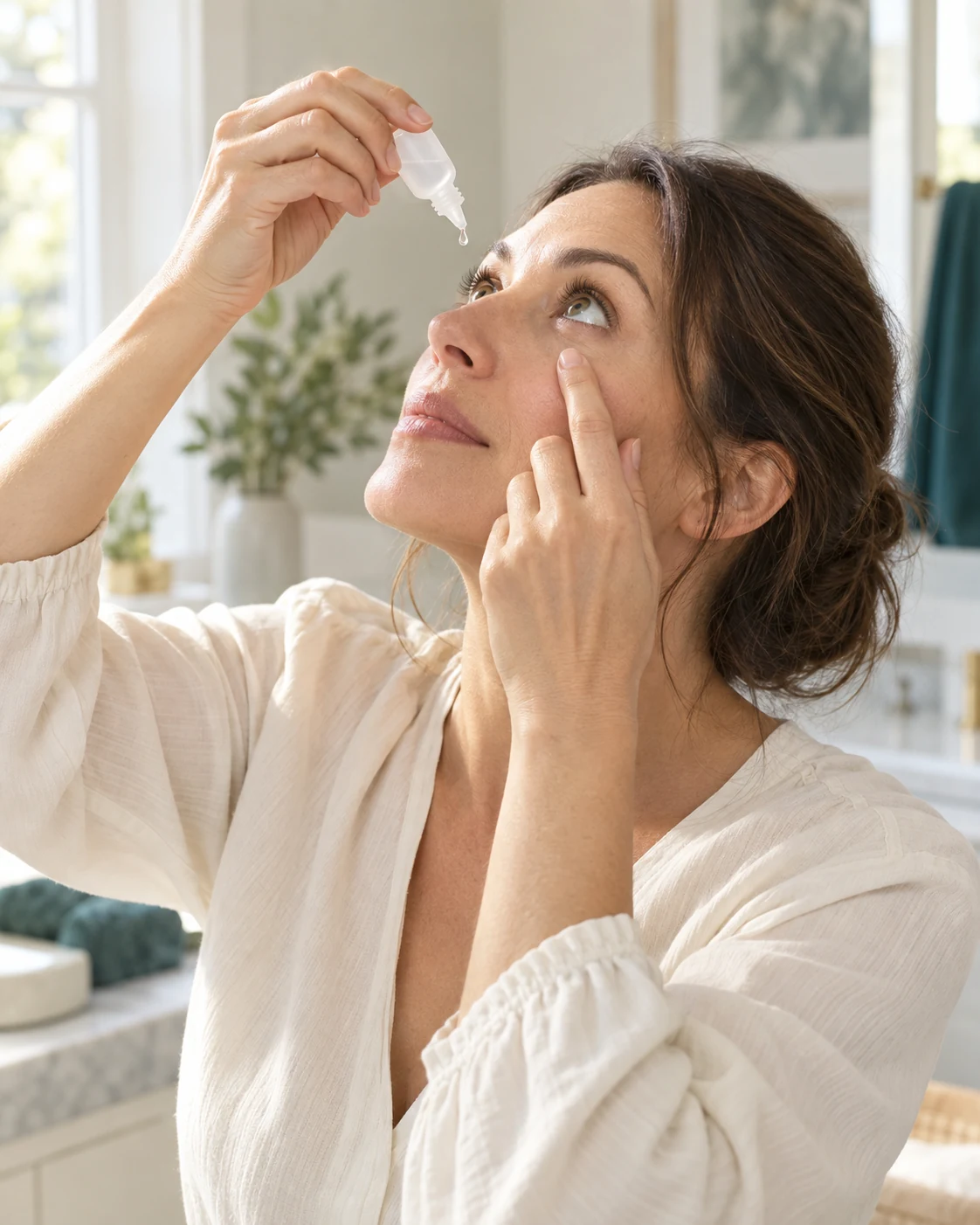
Better informed.
More supported.
Understand your options
Connect with a practitioner
Take a thoughtful next step
A different kind of eye drop
PRP stands for platelet-rich plasma — a preparation made from a small sample of your own blood.
A practitioner draws the blood and uses a centrifuge to separate its components. A platelet-rich preparation is then made into eye drops using the practitioner’s clinical process.
Platelets contain growth factors involved in the body’s repair processes. Researchers are studying how PRP eye drops may support the eye surface in selected patients, including some people with persistent dry eye.
Explore the published researchCollected by a qualified practitioner.
A centrifuge separates the blood components.
Formulated, prescribed and supplied by your practitioner.
PRP eye drops and autologous serum eye drops are different preparations. Your practitioner can explain the formulation, handling and care appropriate for you.
Reasons to explore
PRP may be an option when a practitioner identifies an appropriate eye-surface condition. The right choice starts with an assessment.
Start the conversationAn autologous preparation, with platelets and growth factors from your own blood. Being made from your blood does not make it risk-free.
Clinical studies have reported improvements in some measures of eye-surface health and tear-film stability. Results differ between studies and patients.
For some people with persistent dry eye, a practitioner may consider blood-derived eye drops as part of a broader care plan.
Outcomes vary. PRP is not suitable for everyone, and improvement is not guaranteed.
Small steps. Clear direction.
We make the introduction simple.
Your practitioner makes the clinical decisions.
Tell us how to reach you. We can arrange a phone or video conversation, with in-person introductions in the Okanagan by arrangement.
No payment to get startedIf you would like to proceed, we help coordinate a referral. A licensed practitioner reviews your eyes, medical history and suitability for treatment.
Clinical advice from a practitionerIf treatment is appropriate, your practitioner explains preparation, costs, storage, use and follow-up so you can make an informed decision.
Treatment provided independentlyEyePRP coordinates information and referrals. Independent licensed practitioners assess suitability and provide clinical care.
Curiosity, backed by evidence
Published studies offer reasons to keep exploring. They also have limits. Here’s a clear look at what they found.
In a trial of 96 adults with dry eye, both groups improved. PRP met the study’s prespecified non-inferiority margin for the symptom score at four weeks.
A single-centre, four-week study. It does not establish that PRP is superior to serum or predict an individual’s response.
A 38-person trial found improvements in eye-surface staining and tear-film stability with both PRP and serum, without a significant difference between them. Symptom scores did not significantly change.
A small study in a specific patient group, with 12 weeks of follow-up. Findings may not apply to other causes of dry eye.
A 61-patient study reported greater improvement in symptom scores, tear-film stability and eye-surface staining with PRP over three months. The tear-production test did not differ.
A small comparative study with short follow-up. More research is needed to understand longer-term outcomes.
Research summaries are general information, not a treatment recommendation. Preparation methods and patient groups vary, and long-term evidence remains limited.
Perspectives from Canadian providers
Beyond the research, clinic and preparation-provider resources offer a helpful look at the process and the practical side of care.
Suitability & preparation
Explains own-blood PRP for persistent dry eye and eye-surface problems, with an in-house blood draw, centrifuge process and individual suitability checks.
A branded PRP preparation
Introduces a four-stage process: blood collection, centrifugation, extraction and dispensing. Its system is one branded approach to preparing PRP eye drops.
The practical side of care
Discusses platelet-derived components in dry-eye care and the practicalities of repeated use and cold storage. Handling instructions depend on the preparation supplied.
Part of a clinician-led plan
Describes MYE Drop within a clinician-led dry-eye plan, from blood collection to practitioner-directed use, and explains how PRP differs from autologous serum.
These sources describe their own clinic protocols or products. Your treating practitioner provides the instructions for your preparation; clinic information is distinct from the published trial evidence above.
A little clarity
A personal decision deserves
a thoughtful conversation.
Platelet-rich plasma eye drops are a blood-derived preparation made from a sample of your own blood. A practitioner separates the blood components using a centrifuge and prepares the drops according to their clinical process. PRP and autologous serum are distinct preparations; your practitioner can explain which, if either, is appropriate.
That decision requires a clinical assessment. PRP eye drops have been studied in selected people with dry eye and other eye-surface conditions. The cause of your symptoms, your medical history, current care and the available evidence all matter. Our introductory consultation is an information and referral conversation, not a diagnosis.
They are not risk-free. A blood draw may cause bruising, discomfort or fainting. Eye drops can cause irritation, and contamination or incorrect storage can lead to infection. Preparation, handling, storage and follow-up matter. Your practitioner should explain the risks, expected benefits and alternatives before you decide.
Seek urgent medical attention for sudden vision changes, severe eye pain or other urgent eye symptoms.
EyePRP provides information and coordinates referrals. Independent licensed practitioners assess suitability, prescribe where appropriate, prepare or arrange the drops, and provide clinical care. We do not perform blood draws, make eye drops or provide medical advice.
Send a consultation request with your preferred contact method. We get in touch to arrange an introductory phone or video conversation. In-person introductions in the Okanagan can be discussed by arrangement. Sending the form is a request, not a confirmed appointment.
The introductory consultation is free. Treatment fees, any coordination fees, inclusions and ongoing costs will be explained before you commit. We do not collect payments on this website. Practitioner availability and treatment arrangements are confirmed individually.
We are starting in the Okanagan, including Kelowna, West Kelowna, Lake Country, Vernon, Penticton and surrounding communities. If you live elsewhere, you can submit an inquiry; we will confirm whether an appropriate referral is available. An inquiry does not guarantee access to treatment.
Your next step
Have questions about PRP eye drops?
We’re here to help you explore the next step.
This is an information and referral service. Medical questions and treatment decisions belong with your licensed practitioner.
hello@eyeprp.comA little about you
We only need contact details. Please keep medical information for your practitioner.
A thoughtful first step
Thank you for getting in touch. EyePRP will contact you using your details to discuss your request and arrange the next step.
An appointment has not been booked. Your introductory conversation will be arranged separately.